1. Linuxmint verwenden
2. Proprietäre Treiber verwenden
3. Feststellen, dass ia32-libs nicht mehr geht bzw nicht mehr unterstützt wird
4. Sich über sinnlose Paketkonflikte ärgern (ich hab dieses Paket "per
Hand" installiert, d.h. extrahiert und als manuell installiert
festgelegt: http://packages.ubuntu.com/utopic/libqtwebkit4)
5. Skype versuchen zu installieren
6. Nach und nach tiefer in den Anhängigkeiten buddeln und die Linuxmint
Variante durch die Ubuntu Variante ersetzen (OMG plötzlich darf ich die
32 bit Version des selben Paketes gleichzeit installieren)
7. Nen paar Sachen selber installieren
8. Apt-get will immer noch die Pakete auf die Mint Variante bei Skype
Installatio upgraden ... d.h. mein halbes System dabei deinstallieren
9. Aptitude wirkt Wunder
</Ragemode>
Und die Moral von der Geschichte (@Linuxmint Entwickler): hört auf eure eigene Pakete zu packen, wenn ihr das nicht könnt ;-)


July 27, 2014
[en] [Thought Jumps] Energy prices and energy saving
It is in your daily life: The Gasoline prices are getting higher and higher und one tank filling is a few bucks more expensive.And these few bucks are getting more and more.
At the same time we protest agains too much energy and (in general) resource wasting. One solution would be to buy products which last longer (see my previous post)
... can be within the energy prices. If something costs more, it is more valuable. This means you will save it more.This should also apply to our energy prices. Our energy and our resources are running low and we shouldn't close our eyes but accept these facts. You can get a win-win(-win-win) situation:
Those measures would mainly affect the low income population, who are driving to work everyday. This could be solved with letting the companies pay for each kilometer their employees have to drive. With this measures the companies would get under pressure to organize e.g. buses for their employees.
At the same time we protest agains too much energy and (in general) resource wasting. One solution would be to buy products which last longer (see my previous post)
The solution ...
... can be within the energy prices. If something costs more, it is more valuable. This means you will save it more.This should also apply to our energy prices. Our energy and our resources are running low and we shouldn't close our eyes but accept these facts. You can get a win-win(-win-win) situation:
- You save money
- You save gasoline
- Less traffic jam in the city with this less gasoline waste while staying in the jam
- CO2 reduction
Disadvantages and problems
Those measures would mainly affect the low income population, who are driving to work everyday. This could be solved with letting the companies pay for each kilometer their employees have to drive. With this measures the companies would get under pressure to organize e.g. buses for their employees.
Costs for heat
The next problem would be increasing heat costs. Those should be subsidize (for low-income people) with the higher costs in general.Politics and realization
The only way to realize this would be facing the facts and be honest. All of those measures should apply for the companies as well. It is simply wrong to be mad just because some politician thinks about rising taxes. Because of those reactions, "those guys" aren't able to do something. The best government can't do anything without having some backup from the people.
July 3, 2014
[de] [Gedankensprünge] Energiepreise und Energiesparen
Man erfährt es täglich am eigenen Leib: Die Benzin und Dieselpreise wurden wider erhöht, einmal Tank auffüllen kostet plötzlich ein paar Euro mehr. Auf den ersten Blick erscheint das recht wenig, aber mit der Zeit kostet Autofahren immer mehr.
Gleichzeitig beschweren wir uns über einen zu hohen Energie- (und allgemein) Ressourcenverbrauch. Eine Lösung und Verbesserung wäre es, Produkte zu kaufen, die man länger verwenden kann (siehe vorheriger Post auf meinem Blog).
... kann aber in den Energiepreisen liegen. Wenn etwas mehr kostet, geht man damit sparsamer um. Und genau das sollte auch auf die Energiepreise zutreffen. Die Energie und die Ressourcen gehen uns nun mal zur Neige und wir sollten nicht die Augen davor verschließen sondern diese Tatsache akzeptieren. Wenn es für eine Person billiger ist, den Bus zu nehmen, anstatt sich jeden Tag im Stockenden Verkehr sich durch eine überfüllte Innenstadt zu quälen, dann sollte das auch so sein. Das ganze ergibt dann eine Win-Win(-Win-Win ...) Situation:
Probleme werden hauptsächlich für Geringverdiener auftreten, die auf das Auto angewiesen sind. Dies kann man z.B. durch eine gesetzlich festgelegte höhere Kilometerpauschale lösen. Außerdem werden die Unternehmen dann dazu gezwungen, sich Alternativen auszudenken (um Kosten zu sparen).
Durchzusetzen wäre dies nur, wenn wir uns die Tatsachen vor Augen halten und ehrlich sind. Außerdem sollten die Regelungen und Steuern sowohl für Unternehmen als auch für private Haushalte gelten. Es ist nur falsch, mit Empörung zu reagieren, wenn ein Politiker eine Steuererhöhung nur in Erwägung zieht. Wegen solcher Reaktionen können "die da" gar nichts machen. Da bringt auch die beste Regierung nichts, wenn sie keinen Rückhalt hat.
Gleichzeitig beschweren wir uns über einen zu hohen Energie- (und allgemein) Ressourcenverbrauch. Eine Lösung und Verbesserung wäre es, Produkte zu kaufen, die man länger verwenden kann (siehe vorheriger Post auf meinem Blog).
Die Lösung des Problems ...
... kann aber in den Energiepreisen liegen. Wenn etwas mehr kostet, geht man damit sparsamer um. Und genau das sollte auch auf die Energiepreise zutreffen. Die Energie und die Ressourcen gehen uns nun mal zur Neige und wir sollten nicht die Augen davor verschließen sondern diese Tatsache akzeptieren. Wenn es für eine Person billiger ist, den Bus zu nehmen, anstatt sich jeden Tag im Stockenden Verkehr sich durch eine überfüllte Innenstadt zu quälen, dann sollte das auch so sein. Das ganze ergibt dann eine Win-Win(-Win-Win ...) Situation:
- Man spart Geld
- Man spart Benzin
- Weniger Stau in der Innenstadt und somit weniger Benzinverbrauch anderer Autos im Standgas
- Weniger CO2 Ausstoß
Nachteile und Probleme
Probleme werden hauptsächlich für Geringverdiener auftreten, die auf das Auto angewiesen sind. Dies kann man z.B. durch eine gesetzlich festgelegte höhere Kilometerpauschale lösen. Außerdem werden die Unternehmen dann dazu gezwungen, sich Alternativen auszudenken (um Kosten zu sparen).
Ein Beispiel:
In der Stadt Neuburg wohnen viele Leute, die für Audi und deren Zulieferer arbeiten. Allerdings liegt Neuburg und Audi ca. eine halbe Stunde entfernt. Da die meisten im Schichtbetrieb arbeiten und somit zu selben Zeit am Arbeitsplatz erscheinen müssen, wäre es wieder eine Win-Win Situation, wenn der Arbeitgeber einen Bus anbietet, der früh genug in Neuburg abfährt, damit alle zum Schichtwechsel an ihrem Arbeitsplatz sind.Heizkosten
Eine weitere Problematik wären die steigenden Heizkosten. Diese müssten für Geringverdiener subventioniert werden (d.h. weniger Steuern). Diese Subventionen könnte man mit allgemein höheren Steuern finanzieren.Politik und Durchsetzung
Durchzusetzen wäre dies nur, wenn wir uns die Tatsachen vor Augen halten und ehrlich sind. Außerdem sollten die Regelungen und Steuern sowohl für Unternehmen als auch für private Haushalte gelten. Es ist nur falsch, mit Empörung zu reagieren, wenn ein Politiker eine Steuererhöhung nur in Erwägung zieht. Wegen solcher Reaktionen können "die da" gar nichts machen. Da bringt auch die beste Regierung nichts, wenn sie keinen Rückhalt hat.
June 15, 2014
How to block IPs easily
A few days ago I finally got my own server. But 20 minutes after setting it up, this started (in /var/log/auth.log):
iptables -A INPUT -s <IP> -j DROP
(you can show your rules via "iptables -L")
This works pretty well, but after some minutes, they start trying to log in from another IP but they used the same ip range: a.b.c.*
After some more google'ing i found the following command:
iptables -I INPUT -m range --src-range <ip-range> -j DROP
you can use this command for example (that's one of the ip address ranges I am getting "attacked"):
iptables -I INPUT -m range --src-range 116.10.191.1-116.10.191.255 -j DROP
To act quicker I recommend setting up two scripts, put them somewhere like "/opt/security" ...:
#1 (blockip.sh):
#2 (blockiprange.sh):
... and setup two bash aliases in ~/.bashrc:
Jun 13 22:13:49 vserver sshd[4468]: Failed password for root from <IP> port 15931 ssh2My first action, of course, was disabling the "root" account and searching for "iptables block ip". And that's what I found:
Jun 13 22:13:53 vserver sshd[4468]: Failed password for root from <IP> port 15931 ssh2
Jun 13 22:13:56 vserver sshd[4468]: Failed password for root from <IP> port 15931 ssh2
Jun 13 22:13:58 vserver sshd[4468]: Failed password for root from <IP> port 15931 ssh2
Jun 13 22:14:01 vserver sshd[4468]: Failed password for root from <IP> port 15931 ssh2
Jun 13 22:14:05 vserver sshd[4468]: Failed password for root from <IP> port 15931 ssh2
iptables -A INPUT -s <IP> -j DROP
(you can show your rules via "iptables -L")
This works pretty well, but after some minutes, they start trying to log in from another IP but they used the same ip range: a.b.c.*
After some more google'ing i found the following command:
iptables -I INPUT -m range --src-range <ip-range> -j DROP
you can use this command for example (that's one of the ip address ranges I am getting "attacked"):
iptables -I INPUT -m range --src-range 116.10.191.1-116.10.191.255 -j DROP
To act quicker I recommend setting up two scripts, put them somewhere like "/opt/security" ...:
#1 (blockip.sh):
#!/bin/bash
iptables -A INPUT -s $1 -j DROP
#2 (blockiprange.sh):
#!/bin/bash
iptables -I INPUT -m iprange --src-range $1 -j DROP
... and setup two bash aliases in ~/.bashrc:
alias blockip="/opt/security/blockip.sh "After setting up you can easily ban an ip (range) with just typing "blockip <ip>" ("blockiprange <iprange>")!
alias blockiprange="/opt/security/blockiprange.sh "
May 19, 2014
Who is Richard Stallman?
Richard Stallman is one of the most important person of the Linux community. But what did he do? And why is he mad about the current Linux Kernel?
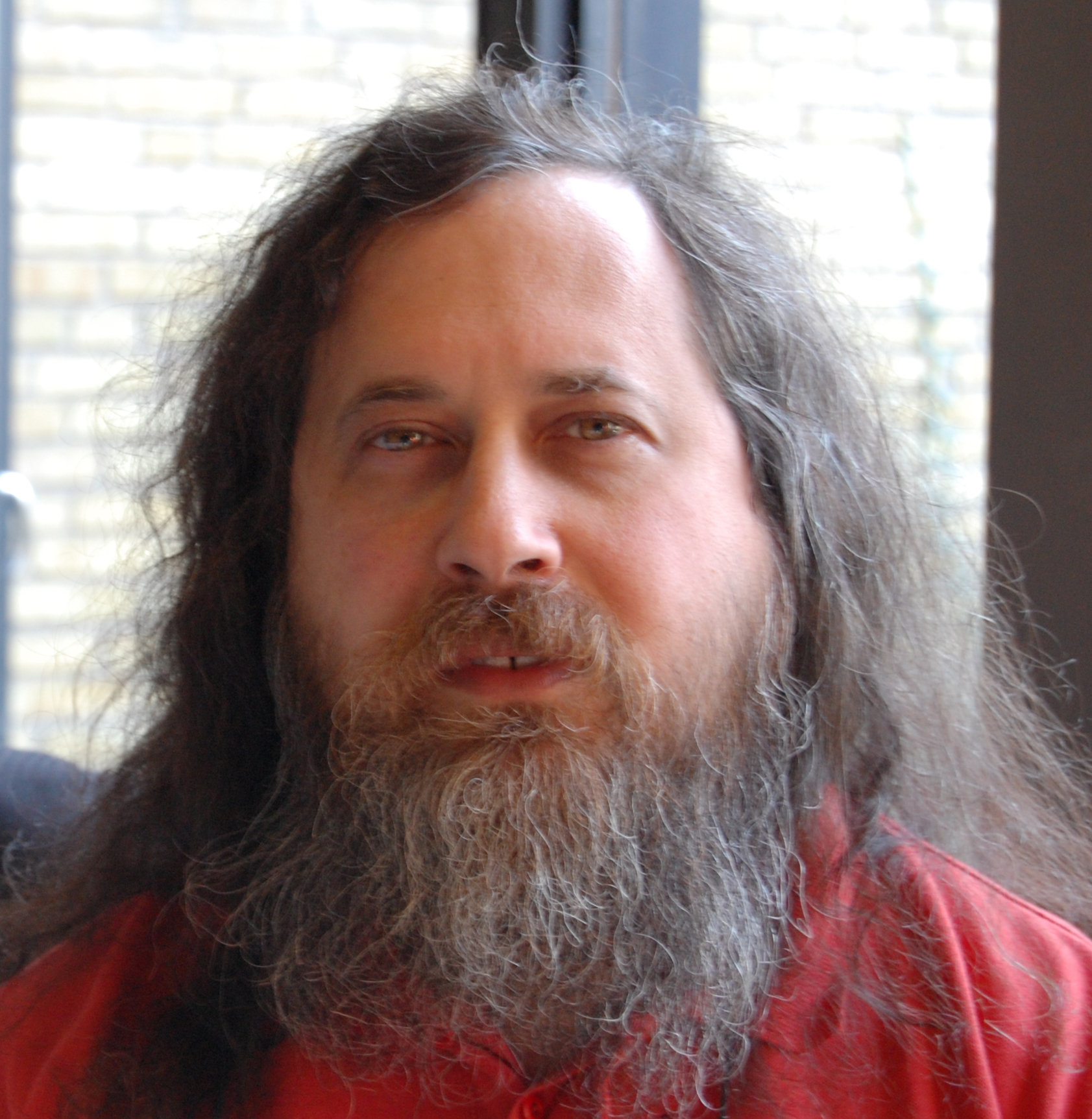
Everything began in the 1970's when AT&T was allowed to license UNIX. Before that, UNIX was nearly for free and the source code was available to the public.
After several years the system grew and you were able to run a GNU system on most of the UNIX Kernels. But unfortunately the GNU Kernel, called "hurd", was not able to replace the UNIX Kernel. Until now, there is no stable release of the hurd Kernel.
Then in 1991 Linus Torvalds wrote an own Kernel which was meant to be a terminal emulation to log into the university’s server. But his Kernel became more and more a "real" Kernel and it was more stable than GNUs "hurd" kernel.
Because of this, GNU was ported to the Linux kernel. The problem was now, that people were starting to call this operating system Linux. But Linux is only the Kernel, the operating system itself was still GNU. In the end you can say, that Linus "stole" all the fame and the name from Richard Stallmans GNU project! In the end some distributions renamed the system itself to "GNU/Linux" which is the "official" name for the operating system.
If you are a real Linux fan, you need to know Stallman, the origin of the GNU system and what he did.
Stallmans page: stallman.org/
Picture from: stallman.org/#photo_drawings
Everything began in the 1970's when AT&T was allowed to license UNIX. Before that, UNIX was nearly for free and the source code was available to the public.
The GNU project
In order to create a free and open operating system, Richard Stallman founded the GNU project (GNU is a recursive acronym for "GNU's Not Unix"). The ideas of this "open" system were these:- The right to use the software for any purpose.
- The right to change the software for your needs.
- The right to share the changes you made with others.
After several years the system grew and you were able to run a GNU system on most of the UNIX Kernels. But unfortunately the GNU Kernel, called "hurd", was not able to replace the UNIX Kernel. Until now, there is no stable release of the hurd Kernel.
Then in 1991 Linus Torvalds wrote an own Kernel which was meant to be a terminal emulation to log into the university’s server. But his Kernel became more and more a "real" Kernel and it was more stable than GNUs "hurd" kernel.
Because of this, GNU was ported to the Linux kernel. The problem was now, that people were starting to call this operating system Linux. But Linux is only the Kernel, the operating system itself was still GNU. In the end you can say, that Linus "stole" all the fame and the name from Richard Stallmans GNU project! In the end some distributions renamed the system itself to "GNU/Linux" which is the "official" name for the operating system.
If you are a real Linux fan, you need to know Stallman, the origin of the GNU system and what he did.
Stallmans page: stallman.org/
Picture from: stallman.org/#photo_drawings
Subscribe to:
Posts (Atom)