1. Linuxmint verwenden
2. Proprietäre Treiber verwenden
3. Feststellen, dass ia32-libs nicht mehr geht bzw nicht mehr unterstützt wird
4. Sich über sinnlose Paketkonflikte ärgern (ich hab dieses Paket "per
Hand" installiert, d.h. extrahiert und als manuell installiert
festgelegt: http://packages.ubuntu.com/utopic/libqtwebkit4)
5. Skype versuchen zu installieren
6. Nach und nach tiefer in den Anhängigkeiten buddeln und die Linuxmint
Variante durch die Ubuntu Variante ersetzen (OMG plötzlich darf ich die
32 bit Version des selben Paketes gleichzeit installieren)
7. Nen paar Sachen selber installieren
8. Apt-get will immer noch die Pakete auf die Mint Variante bei Skype
Installatio upgraden ... d.h. mein halbes System dabei deinstallieren
9. Aptitude wirkt Wunder
</Ragemode>
Und die Moral von der Geschichte (@Linuxmint Entwickler): hört auf eure eigene Pakete zu packen, wenn ihr das nicht könnt ;-)

Showing posts with label Linux. Show all posts
Showing posts with label Linux. Show all posts

June 15, 2014
How to block IPs easily
A few days ago I finally got my own server. But 20 minutes after setting it up, this started (in /var/log/auth.log):
iptables -A INPUT -s <IP> -j DROP
(you can show your rules via "iptables -L")
This works pretty well, but after some minutes, they start trying to log in from another IP but they used the same ip range: a.b.c.*
After some more google'ing i found the following command:
iptables -I INPUT -m range --src-range <ip-range> -j DROP
you can use this command for example (that's one of the ip address ranges I am getting "attacked"):
iptables -I INPUT -m range --src-range 116.10.191.1-116.10.191.255 -j DROP
To act quicker I recommend setting up two scripts, put them somewhere like "/opt/security" ...:
#1 (blockip.sh):
#2 (blockiprange.sh):
... and setup two bash aliases in ~/.bashrc:
Jun 13 22:13:49 vserver sshd[4468]: Failed password for root from <IP> port 15931 ssh2My first action, of course, was disabling the "root" account and searching for "iptables block ip". And that's what I found:
Jun 13 22:13:53 vserver sshd[4468]: Failed password for root from <IP> port 15931 ssh2
Jun 13 22:13:56 vserver sshd[4468]: Failed password for root from <IP> port 15931 ssh2
Jun 13 22:13:58 vserver sshd[4468]: Failed password for root from <IP> port 15931 ssh2
Jun 13 22:14:01 vserver sshd[4468]: Failed password for root from <IP> port 15931 ssh2
Jun 13 22:14:05 vserver sshd[4468]: Failed password for root from <IP> port 15931 ssh2
iptables -A INPUT -s <IP> -j DROP
(you can show your rules via "iptables -L")
This works pretty well, but after some minutes, they start trying to log in from another IP but they used the same ip range: a.b.c.*
After some more google'ing i found the following command:
iptables -I INPUT -m range --src-range <ip-range> -j DROP
you can use this command for example (that's one of the ip address ranges I am getting "attacked"):
iptables -I INPUT -m range --src-range 116.10.191.1-116.10.191.255 -j DROP
To act quicker I recommend setting up two scripts, put them somewhere like "/opt/security" ...:
#1 (blockip.sh):
#!/bin/bash
iptables -A INPUT -s $1 -j DROP
#2 (blockiprange.sh):
#!/bin/bash
iptables -I INPUT -m iprange --src-range $1 -j DROP
... and setup two bash aliases in ~/.bashrc:
alias blockip="/opt/security/blockip.sh "After setting up you can easily ban an ip (range) with just typing "blockip <ip>" ("blockiprange <iprange>")!
alias blockiprange="/opt/security/blockiprange.sh "
May 19, 2014
Who is Richard Stallman?
Richard Stallman is one of the most important person of the Linux community. But what did he do? And why is he mad about the current Linux Kernel?
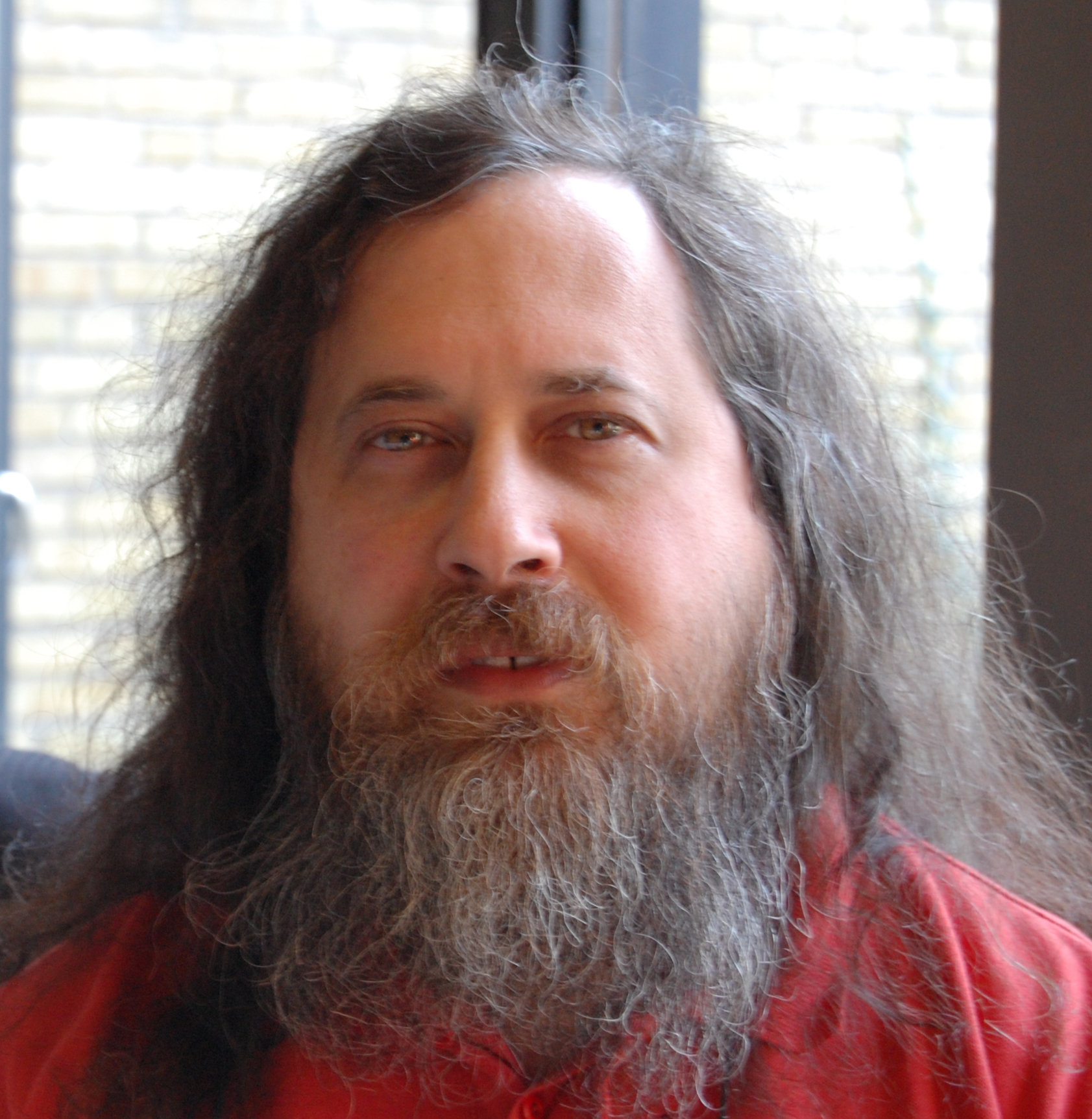
Everything began in the 1970's when AT&T was allowed to license UNIX. Before that, UNIX was nearly for free and the source code was available to the public.
After several years the system grew and you were able to run a GNU system on most of the UNIX Kernels. But unfortunately the GNU Kernel, called "hurd", was not able to replace the UNIX Kernel. Until now, there is no stable release of the hurd Kernel.
Then in 1991 Linus Torvalds wrote an own Kernel which was meant to be a terminal emulation to log into the university’s server. But his Kernel became more and more a "real" Kernel and it was more stable than GNUs "hurd" kernel.
Because of this, GNU was ported to the Linux kernel. The problem was now, that people were starting to call this operating system Linux. But Linux is only the Kernel, the operating system itself was still GNU. In the end you can say, that Linus "stole" all the fame and the name from Richard Stallmans GNU project! In the end some distributions renamed the system itself to "GNU/Linux" which is the "official" name for the operating system.
If you are a real Linux fan, you need to know Stallman, the origin of the GNU system and what he did.
Stallmans page: stallman.org/
Picture from: stallman.org/#photo_drawings
Everything began in the 1970's when AT&T was allowed to license UNIX. Before that, UNIX was nearly for free and the source code was available to the public.
The GNU project
In order to create a free and open operating system, Richard Stallman founded the GNU project (GNU is a recursive acronym for "GNU's Not Unix"). The ideas of this "open" system were these:- The right to use the software for any purpose.
- The right to change the software for your needs.
- The right to share the changes you made with others.
After several years the system grew and you were able to run a GNU system on most of the UNIX Kernels. But unfortunately the GNU Kernel, called "hurd", was not able to replace the UNIX Kernel. Until now, there is no stable release of the hurd Kernel.
Then in 1991 Linus Torvalds wrote an own Kernel which was meant to be a terminal emulation to log into the university’s server. But his Kernel became more and more a "real" Kernel and it was more stable than GNUs "hurd" kernel.
Because of this, GNU was ported to the Linux kernel. The problem was now, that people were starting to call this operating system Linux. But Linux is only the Kernel, the operating system itself was still GNU. In the end you can say, that Linus "stole" all the fame and the name from Richard Stallmans GNU project! In the end some distributions renamed the system itself to "GNU/Linux" which is the "official" name for the operating system.
If you are a real Linux fan, you need to know Stallman, the origin of the GNU system and what he did.
Stallmans page: stallman.org/
Picture from: stallman.org/#photo_drawings
Subscribe to:
Posts (Atom)